
When Ottawa homeowners start closing windows for fall, ventilation becomes much more noticeable.
Cooking, showers, laundry, pets and everyday occupancy continue adding moisture and contaminants to the indoor air, but the house is no longer getting the same natural air exchange it received through open windows.
That is where an HRV or ERV can become an important part of the home's comfort system.
Both provide controlled ventilation. They exhaust stale indoor air and bring in fresh outdoor air while recovering energy from the outgoing air stream.
The important difference is how they handle moisture.
Understanding that difference is the starting point when comparing HRV and ERV systems in Ottawa.
What Does an HRV Do?
HRV stands for heat recovery ventilator.
An HRV transfers heat between the outgoing and incoming air streams without intentionally transferring humidity between them.
During winter, warm stale indoor air passes through the recovery core as fresh cold outdoor air enters the system. Heat from the outgoing air is transferred to the incoming air, reducing how much heating is required compared with bringing cold outdoor air directly into the home.
The two air streams remain separated.
Because an HRV allows indoor moisture to leave with the exhaust air, it can be a good fit for homes that tend to hold too much humidity during winter.
That may include homes where windows frequently collect condensation, occupancy is high, or moisture from cooking and bathing accumulates faster than the home can remove it.
What Does an ERV Do Differently?
ERV stands for energy recovery ventilator.
Like an HRV, it exchanges stale indoor air for fresh outdoor air and recovers heat. An ERV also transfers a portion of the moisture between the two air streams.
That moisture transfer can help moderate how much humidity is lost during Ottawa's dry winter conditions. It can also reduce some of the moisture entering with ventilation air during humid summer weather.
An ERV is not a humidifier, and it is not a dehumidifier.
It does not actively add or remove water from the air. Instead, it moderates moisture transfer as part of the ventilation process.
That distinction is important because homeowners sometimes expect one piece of equipment to solve every humidity problem.
HRV or ERV: Which Is Better for Ottawa?
There is no universal answer.
The better choice depends on the home.
AirZone looks at factors such as winter humidity, window condensation, occupancy, construction, airtightness, existing ductwork and year-round ventilation needs before recommending one system over the other.
An HRV may make more sense when a home routinely holds excess indoor humidity during winter and needs to exhaust more of that moisture.
An ERV may be worth considering when the home becomes uncomfortably dry, when year-round ventilation is important, or when moderating moisture transfer is desirable.
The right answer is not determined by Ottawa's climate alone. Two houses on the same street can behave very differently.
Why Window Condensation Can Be a Ventilation Clue
Condensation on windows is one of the most common reasons homeowners start thinking about ventilation.
When warm indoor air containing moisture reaches a sufficiently cold glass surface, water can condense on the window.
An HRV may help when that moisture is being caused by excessive indoor humidity and insufficient ventilation. But ventilation is only one part of the diagnosis.
Humidifier settings, bathroom exhaust fans, cooking habits, basement moisture, occupancy and the temperature of the window itself can all contribute.
That is why simply increasing ventilation without understanding the source of the moisture is not always the best approach.
AirZone's HRV and ERV ventilation services look at the system in the context of the entire home.
Does an HRV or ERV Work With a Furnace?
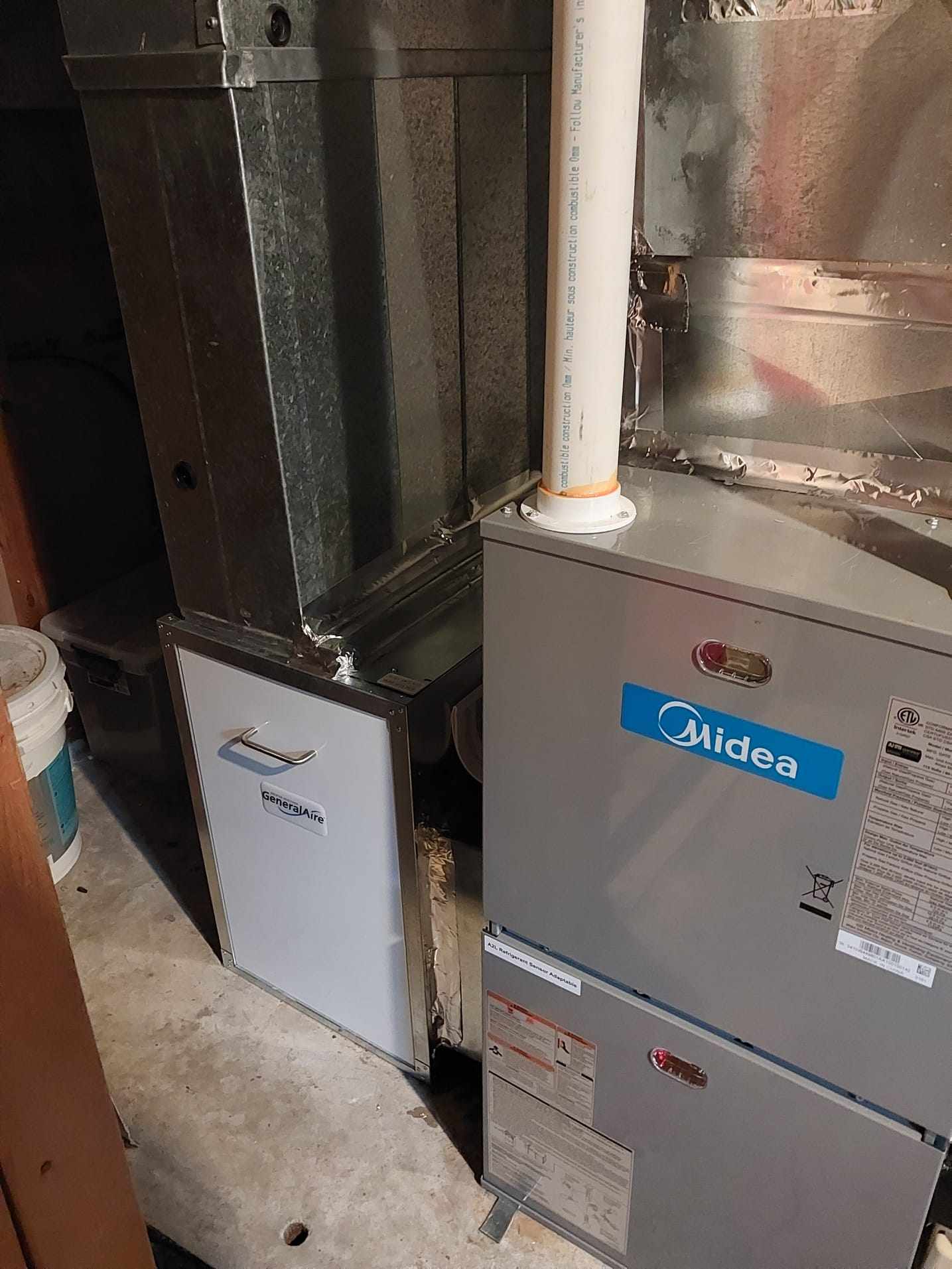
Yes. Many Ottawa homes use a ventilation system alongside a forced-air furnace.
Depending on the design, an HRV or ERV may use dedicated ductwork, connect partly to the furnace duct system or use another appropriate configuration.
The important part is proper design and balancing.
A ventilation system needs to bring in and exhaust the appropriate amount of air. Poorly balanced airflow can create pressure issues and prevent the system from operating as intended.
Existing homes can often accommodate an HRV or ERV, but available mechanical-room space, exterior wall access, duct routing and the existing HVAC system all affect the installation approach.
What Maintenance Does a Ventilation System Need?
An HRV or ERV is not a set-it-and-forget-it appliance.
Filters require regular attention. Exterior intake and exhaust hoods need to remain clear. Drains, grilles and recovery cores may also require periodic cleaning according to the manufacturer's instructions.
As fall arrives, this is a practical time to inspect ventilation equipment because windows will soon remain closed for longer periods.
HRVs and ERVs can also be included with eligible equipment during AirZone annual HVAC maintenance.
Ventilation Should Solve a Real Home Comfort Problem
The goal is not to install an HRV simply because Ottawa is cold or choose an ERV because it sounds newer.
The goal is controlled fresh air that matches the way your home actually behaves.
If the house feels stale, windows are regularly wet, indoor humidity is difficult to manage, or an existing ventilation system is not working properly, AirZone can review the equipment and explain your options.
Learn more about HRV and ERV installation, repair and service in Ottawa and choose a ventilation strategy based on the home rather than a one-size-fits-all rule.





Write a comment ...