
By AirZone HVAC Services
A cold front bedroom and a rear addition can need quite different heating solutions, even when they belong to the same house. In an older Ottawa brick home, the challenge is getting heat into the rooms that need it while working around plaster, wood trim, radiators and a layout that may have changed over the years.
Ductless heat pumps give us several ways to approach that work without adding full-size ducts throughout the house. The best arrangement depends on the rooms, their heating requirements and how much alteration the homeowner wants to undertake.
Start with the house behind the brick
A brick exterior tells us little about the insulation behind it. Solid masonry and brick veneer over a framed wall are different constructions, and later renovations may have changed their heating needs. Natural Resources Canada's wall guidance explains these differences. If insulation upgrades are planned, the wall assembly needs proper assessment; drainage cavities behind brick must remain clear.
We look at windows, exposed walls, ceilings, air leakage and adjoining spaces when assessing the heating load. A rear addition should be evaluated on its own merits rather than treated as another room in the original building. Planned air sealing or insulation work belongs in the discussion before equipment is selected.
Choose a layout that reaches the occupied rooms
A single-zone system pairs one indoor unit with one outdoor unit. It can be a practical solution for an addition, office or connected living area where heat can circulate freely. In homes with radiators or baseboards, those heaters can remain available for other rooms or supplementary heat.
A multi-zone system connects several compatible indoor units to one outdoor unit. That can reduce the number of outdoor units while providing direct heating and cooling in different spaces. Each room still needs suitable equipment, and the outdoor unit must have enough capacity for the connected rooms when they need heat together. Our Ottawa ductless heating options include both arrangements; separate single-zone systems are also worth comparing where rooms are far apart or have different demands.
Bedrooms need particular attention. A unit on the landing may warm the hallway while closed bedroom doors restrict airflow. Where ceiling or attic space allows, a concealed indoor unit with short ducts can deliver air to a group of bedrooms through individual grilles. NRCan's sizing and selection guide identifies this as an option for several small, isolated rooms. The design needs supply and return-air paths, drainage and access for servicing. Rooms served by one indoor unit do not automatically have separate temperature controls.
Fit the indoor units around the finishes
High-wall units are common, but they need clear airflow and accessible filters. A position above ornate trim may look tidy on a drawing yet leave too little clearance or direct air onto a bed. Compatible floor-mounted units can suit rooms with limited upper-wall space. Ceiling cassettes free up wall space but require a suitable ceiling cavity and may involve more opening and repair work.
We compare those choices with the room's load and the finishes you want to preserve. The proposal should make any ceiling openings, access panels and plaster or trim repairs clear before installation starts.
Size for winter heating, with a clear backup plan
For substantial winter heating, we consider cold-climate equipment and its output in the proposed indoor-and-outdoor combination. Manufacturer claims vary by model. Mitsubishi Electric's cold-climate product guidance, for example, distinguishes temperatures at which particular models maintain rated capacity from their lowest operating temperatures.
A heat pump can still be running when its output falls short of the house's needs. NRCan describes that capacity crossover as the thermal balance point. Retained radiators, baseboards or another suitable heating source may cover the shortfall. The design should explain which rooms receive backup heat and how the controls work. Existing heaters should only be removed after both winter capacity and room coverage have been established.
Plan the installation routes and outdoor location
Refrigerant piping, wiring and cooling condensate drainage all need a route. Keeping pipe covers off a prominent brick elevation is worth considering, provided the route suits the equipment's length and elevation limits. Wall openings need to be sealed against air and water entry, and mounting methods must suit the wall's construction and condition. A condensate pump, where required, needs reachable service access.
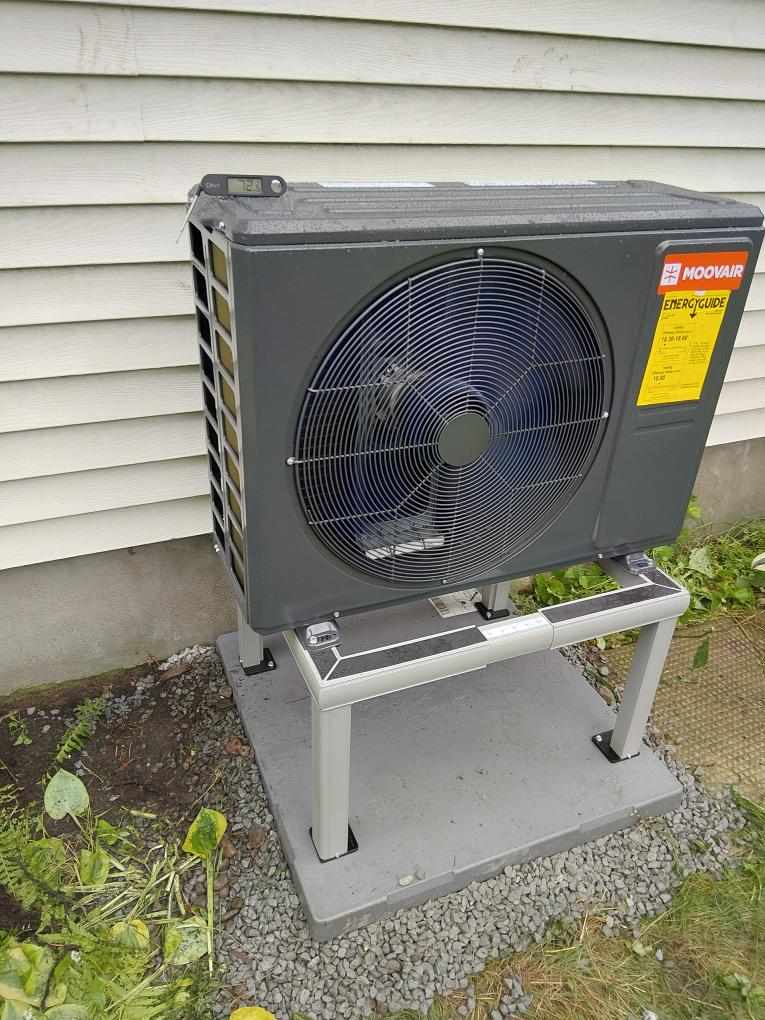
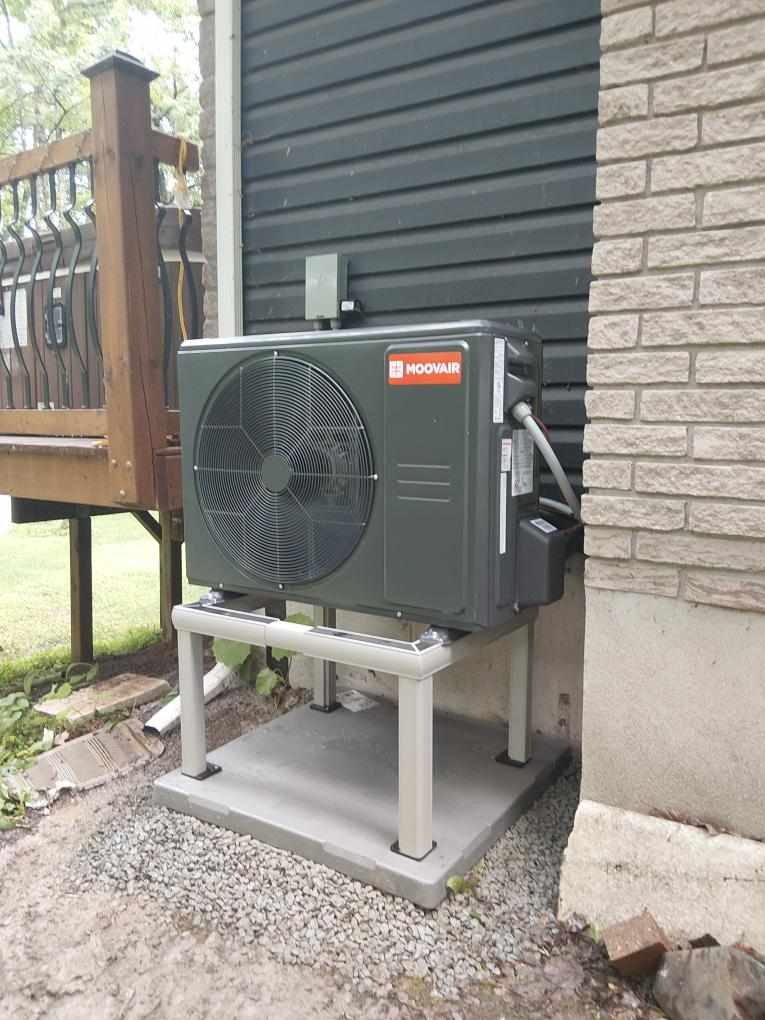
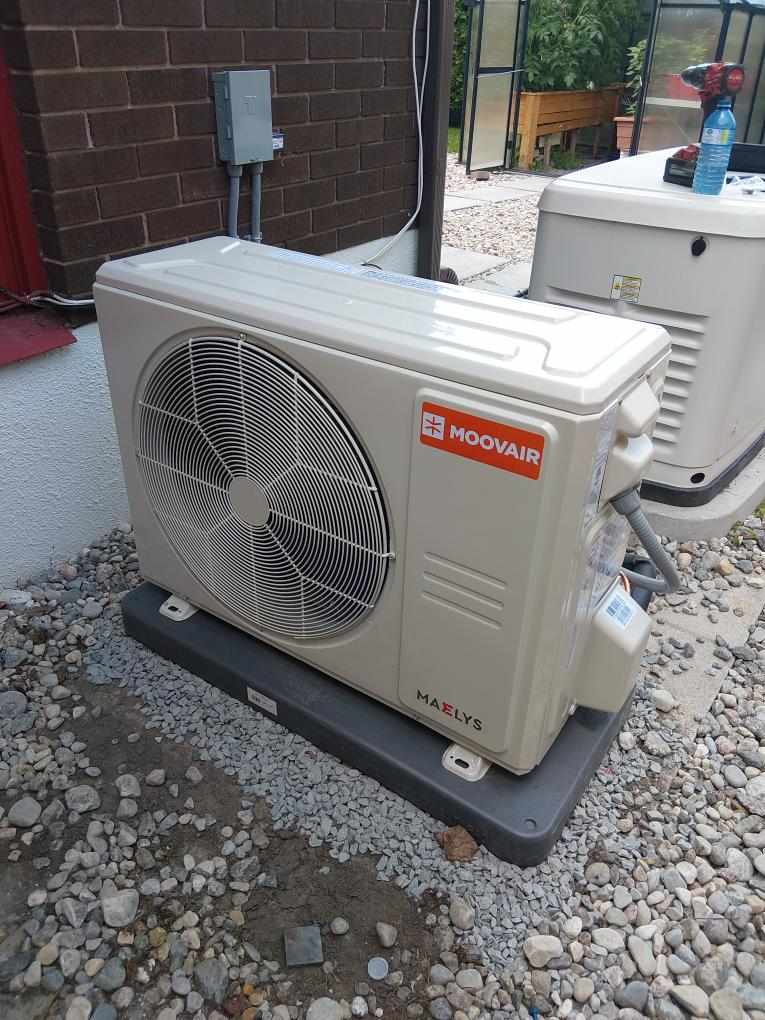
The outdoor unit also needs room for airflow, maintenance and winter operation. Snow drifting, roof runoff and defrost water matter as much as appearance. Its support and drainage arrangement should prevent ice from creating a problem around the unit or across a walking route. Clearances and snow protection must follow the instructions for the supplied model.
Our heat pump installation team reviews these details alongside electrical requirements and controls. Commissioning should include the manufacturer's refrigerant-circuit checks, drainage checks and testing of every indoor unit, followed by a walkthrough of operation and filter care.
Have usable ducts in part of the house?
Where an older home already has suitable forced-air ductwork, AirZone ComfortSpan may offer another route. It combines a compatible central connection with selected ductless zones. Suitability depends on the calculated loads, available duct airflow and approved equipment combination.
If you're considering ductless heating for an older Ottawa home, tell us how you heat it now, which rooms need attention and which finishes you want to keep. Request a ductless heating quote from AirZone so we can compare layouts and the installation work each one requires.




Write a comment ...